
Fire-Resistant Fencing: Why Precast Concrete Is Ideal for Industrial Sites
Industrial fires spread faster than most people expect. According to the National Fire Protection Association, industrial and manufacturing facilities account for billions of dollars in property damage each year — and perimeter fencing is often an overlooked factor in how quickly a fire can jump from one structure to the next. At DFW Fence Pro, we’ve spent years helping industrial clients across the Dallas-Fort Worth region make smarter, longer-lasting infrastructure decisions, and one conversation comes up more than almost any other: what kind of fencing can actually hold up when things go wrong? The answer, more often than not, is precast concrete.
Most facility managers don’t think about their fencing until something forces them to. A fire inspection flags a compliance issue, an insurance underwriter asks uncomfortable questions, or — in the worst cases — an incident occurs and the aftermath reveals just how much the right perimeter barrier could have changed the outcome. Fire-resistant fencing isn’t just a regulatory checkbox; it’s a genuine risk management tool, and understanding why precast concrete outperforms other materials can help you make a more confident decision for your site.
Why Standard Fencing Falls Short in Industrial Environments
Chain-link fencing is common on industrial sites because it’s affordable and quick to install. But in a fire scenario, it offers virtually no barrier protection. The metal conducts heat rapidly, the open design allows embers and flames to pass through freely, and once a fire reaches an adjacent structure, the fence has done nothing to slow it down. Wood fencing, even treated varieties, is obviously combustible. Vinyl and composite options may resist moisture and pests, but they melt and warp under high heat, releasing toxic fumes in the process.
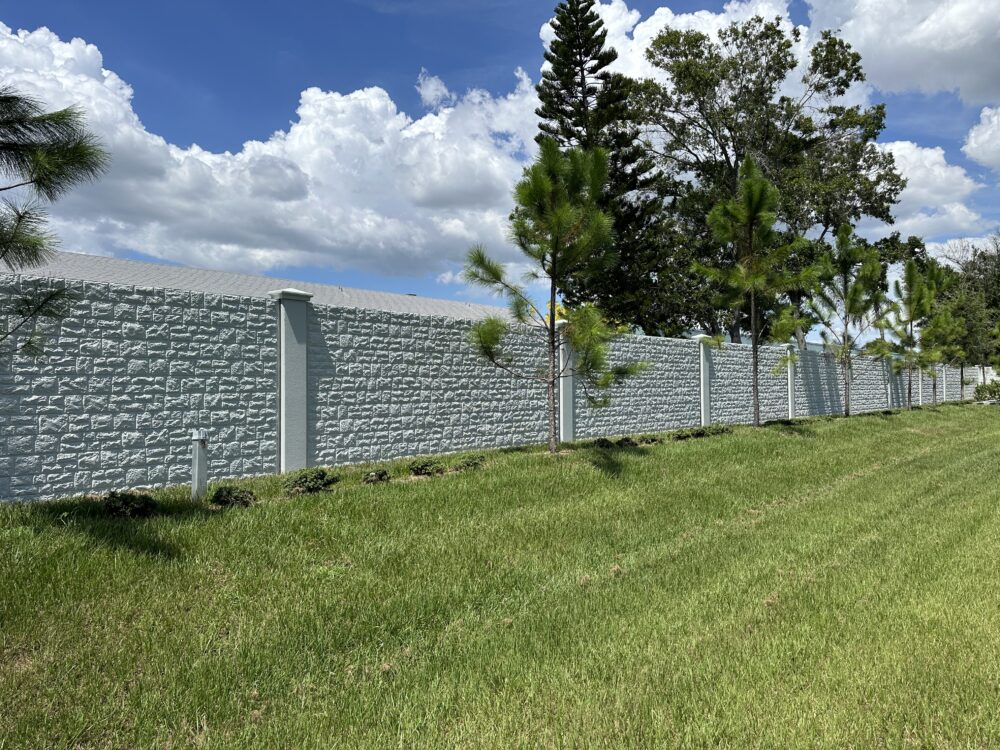
Precast concrete, by contrast, is non-combustible by nature. It doesn’t ignite, it doesn’t melt, and it doesn’t contribute to the spread of a fire. The material’s thermal mass means it absorbs and dissipates heat rather than transferring it — a critical distinction when your facility stores flammable materials, pressurized equipment, or anything that could accelerate a blaze.
What Makes Precast Concrete the Smarter Long-Term Investment
Beyond fire resistance, precast concrete fencing brings a set of structural and practical advantages that matter specifically in industrial contexts. It’s manufactured off-site under controlled conditions, which means consistent quality and faster installation compared to poured-in-place alternatives. Once it’s up, it requires very little maintenance — no painting, no sealing, no replacing warped or rotted sections.
It also performs exceptionally well against the kinds of physical stresses industrial sites generate: heavy equipment vibrations, vehicle impact, wind loads in open or exposed areas. Precast panels are dense and heavy, which translates to a fence that stays put and stays intact under conditions that would compromise lighter materials.
From an insurance and compliance standpoint, concrete perimeter barriers are increasingly recognized by underwriters as a meaningful risk reduction measure. Facilities that invest in fire-resistant infrastructure often see better terms on commercial property coverage — a downstream benefit that partially offsets the upfront cost difference.
Security and Fire Resistance Aren’t Competing Priorities
One concern we hear from facility managers is that a more solid, opaque barrier might create visibility problems — making it harder for security cameras or patrol personnel to monitor the perimeter. It’s a fair point, and it’s worth knowing that precast concrete systems can be designed with that in mind. Panel heights, configurations, and complementary security integrations can all be tailored to balance privacy, visibility, and access control without compromising fire resistance.
Making the Right Call for Your Facility
Choosing fencing for an industrial site isn’t a decision that should be driven purely by upfront cost. The materials you put around your facility affect how it performs under stress, how your insurer evaluates your risk profile, and ultimately, how much protection you can count on when something goes wrong. Precast concrete isn’t the right answer for every application, but for industrial sites where fire risk is a genuine concern, it’s hard to argue against it.
DFW Fence Pro specializes in helping industrial clients evaluate their options honestly and install solutions that hold up for decades. If you’re evaluating perimeter fencing for a new facility or considering an upgrade to an existing site, we’re happy to walk you through what makes sense for your specific situation. Reach out to our team today for a consultation.