
How to Maintain Your Automatic Wood Gate and Make It Last
An automatic wood gate is one of the most valuable investments you can make for your home’s security, curb appeal, and convenience. At DFW Fence Pro, a trusted fencing contractor serving the greater Dallas-Fort Worth area, we’ve installed and serviced hundreds of automatic wood gates over the years, and the number one thing we hear from homeowners is the same question: “Why did mine fail so soon?” The honest answer almost always comes down to one thing, which is maintenance, or more precisely, the lack of it.
Wood is a naturally beautiful material, but it responds to its environment in ways that metal and vinyl simply do not. In the Texas climate, where summer heat is intense, humidity fluctuates, and storm seasons can be brutal, your wood gate faces stress year-round. Without a consistent maintenance routine, even the highest-quality gate can begin to warp, crack, or malfunction within just a few years. The good news is that most of these problems are entirely preventable with the right knowledge and a little effort each season. This guide is designed to walk you through everything you need to know to keep your automatic wood gate looking great and operating smoothly for decades to come.
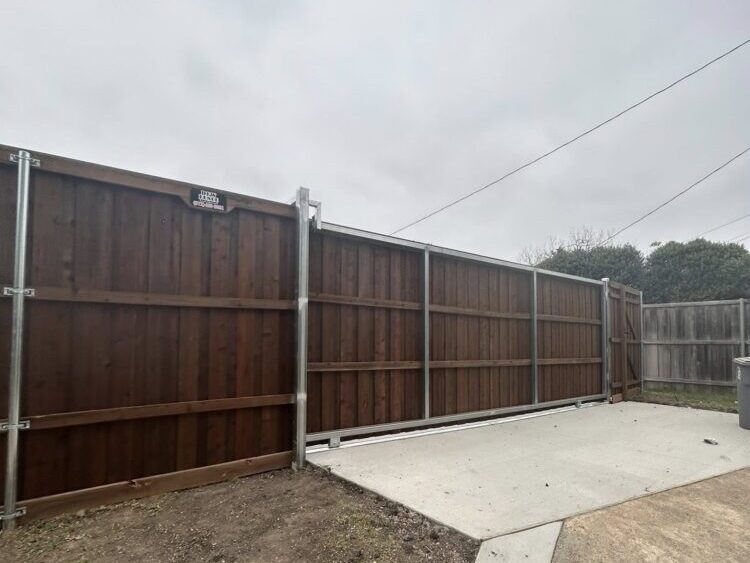
Understanding What Actually Damages Your Wood Gate
Before you can protect your gate, it helps to understand what is working against it. Wood is a porous, organic material that absorbs and releases moisture constantly. When it absorbs too much water during rain or high humidity, it swells. When it dries out in the heat, it contracts. Over years of this cycle, the wood fibers begin to break down, which leads to warping, splitting, and eventually structural failure.
On top of that, UV radiation from direct sunlight breaks down the finish and the wood fibers themselves, causing graying, cracking, and surface degradation. Add in the mechanical stress of an automated opener that cycles the gate open and closed dozens of times per week, and you have a material under constant physical and environmental pressure.
The good news is that wood is also one of the most responsive materials to protective care. A well-maintained wood gate genuinely can last 20 to 30 years or more
Seasonal Inspections: The Foundation of Gate Longevity
The single most impactful habit you can develop as a wood gate owner is conducting a thorough visual inspection every season. Four times a year, take 15 minutes to walk around your gate and look for early warning signs before they become expensive repairs.
During your inspection, check the wood surface for any signs of cracking, splitting, or soft spots that could indicate rot. Run your hand along the boards and posts, because soft or spongy areas are a red flag that moisture has penetrated the wood. Look at the bottom of the gate especially, since that is where water collects and rot begins most often.
Check every hinge, bolt, and bracket for rust, looseness, or signs of stress. A gate that hangs even slightly off-center puts enormous extra strain on the automated opener, shortening its lifespan significantly. Tighten any loose hardware and replace anything that shows significant corrosion before it causes further damage.
Sealing and Staining: Your Gate’s First Line of Defense
A quality sealant or stain is the most important protective barrier between your wood gate and the elements. Most professionals recommend reapplying a penetrating wood sealant or solid stain every one to two years, depending on sun exposure and how much weather your gate endures.
Before applying any product, clean the surface thoroughly with a wood-safe cleaner to remove dirt, mildew, and old flaking finish. Allow the wood to dry completely, at least 48 hours after any rain, before applying your new coat. Apply with a brush rather than a roller whenever possible, because brushing works the product deeper into the wood grain and edges where moisture most commonly enters.
Pay extra attention to the end grain on all boards, which is the cut ends of the wood that are especially absorbent. Sealing end grain thoroughly can dramatically reduce the rate of moisture penetration and warping over time.
Caring for the Automatic Opener and Hardware
The mechanical components of your gate system deserve just as much attention as the wood itself. Lubricate all moving parts, including hinges, rollers, and the opener’s drive mechanism, every six months using a silicone-based or lithium grease lubricant. Avoid petroleum-based oils, which attract dirt and gum up over time.
Test the gate’s safety auto-reverse feature regularly by placing a two-by-four flat on the ground in the gate’s path. The gate should stop and reverse immediately upon contact. If it does not, that is a safety issue that requires prompt attention from a qualified technician.
Keep the sensor eyes clean and properly aligned. Dirty or misaligned sensors are one of the most common causes of erratic gate behavior and are almost always a quick, inexpensive fix.
When to Call a Professional
Some maintenance tasks are well within the reach of any motivated homeowner, but others require trained eyes and hands. If you notice significant structural warping, large cracks running through load-bearing boards, or electrical issues with the opener, it is time to call in a professional. Attempting to force a misaligned gate or jury-rig electrical components can turn a manageable repair into a full replacement.
At DFW Fence Pro, our team provides full gate inspection and maintenance services alongside our installation work. A professional assessment once every year or two can catch developing problems early and save you significantly on long-term repair costs. Your automatic wood gate is a major investment, and with the right care, it is one that will serve your home beautifully for many years ahead. Ready to schedule a professional gate inspection or have questions about your current setup? Contact DFW Fence Pro today and let our team help you protect the investment you’ve made in your home.