
After the Storm: Smart Fence Restoration in DFW
North Texas weather doesn’t ask permission. One afternoon you’ve got a sturdy fence lining your backyard, and by evening a fast-moving thunderstorm has knocked panels flat, snapped posts, or uprooted sections entirely. At DFW Fence Pro, we’ve spent years helping homeowners across the Dallas-Fort Worth Metroplex rebuild after exactly these moments, and we know how overwhelming that first walk around the yard can feel. The good news is that post-storm fence restoration doesn’t have to be a drawn-out ordeal when you approach it with the right plan.
Why DFW Storms Are Especially Hard on Fences
Dallas-Fort Worth sits in a region that sees some of the most intense storm activity in the country. According to the National Oceanic and Atmospheric Administration, Texas averages more than 100 tornado events per year, and straight-line winds from supercell thunderstorms routinely exceed 60 miles per hour across Tarrant, Dallas, Collin, and Denton counties. Those wind speeds are more than enough to compromise even well-built fencing, particularly if a fence is more than seven to ten years old or was installed without concrete-set posts.
Wood privacy fences tend to catch the most wind resistance because of their solid panel design, which acts almost like a sail during high-gusts. Chain-link fences often fare better in wind but can buckle or lean severely when debris impact bends a support post. Vinyl fencing, while rot-resistant and low-maintenance under normal conditions, can crack or shatter when struck by flying branches. Understanding which material took the hit, and how, shapes everything about the fence restoration or replacement process that follows.
Assessing the Damage Before Calling Anyone
A thorough post-storm walkthrough of your property is the single most valuable thing you can do before scheduling a contractor. Start at one corner of your fence line and work your way around methodically. You’re looking for leaning or snapped posts, detached fence rails, cracked or split pickets, and any sections where the fence has pulled away from the post entirely. Take photos from multiple angles at each damage point. These images serve two important purposes: they give your fencing contractor an accurate picture of the scope of work, and they document everything your homeowner’s insurance adjuster will need to process a claim.
Speaking of insurance, many DFW homeowners don’t realize that wind and storm damage to fencing is typically covered under standard homeowner’s policies. Review your policy’s “other structures” coverage, which usually applies to fences, detached garages, and sheds. Most policies cover structures up to ten percent of your home’s insured value. Calling your insurance provider before you book repairs can save you a significant out-of-pocket expense.
Repair Versus Full Replacement: How to Think Through It
This is the question we hear most often at DFW Fence Pro, and the honest answer depends on three factors: the age of your existing fence, the percentage of the fence line that sustained damage, and whether the original installation meets current building standards.
If less than 30 percent of your fence was damaged and the remaining sections are structurally sound, targeted fence restoration is usually the most cost-effective route. A skilled crew can replace individual posts, re-string rails, and swap out damaged pickets or panels without touching the sections that weathered the storm just fine.
When damage exceeds roughly half of the fence line, or when an inspection reveals that surviving sections have soft wood at the base, significant post wobble, or outdated hardware, full replacement often makes more financial sense over a five to ten year horizon. A new fence installed with pressure-treated posts set in concrete, at the proper depth for DFW’s clay-heavy soil, will outlast piecemeal repairs on an aging structure every time.
Choosing the Right Material for DFW’s Climate
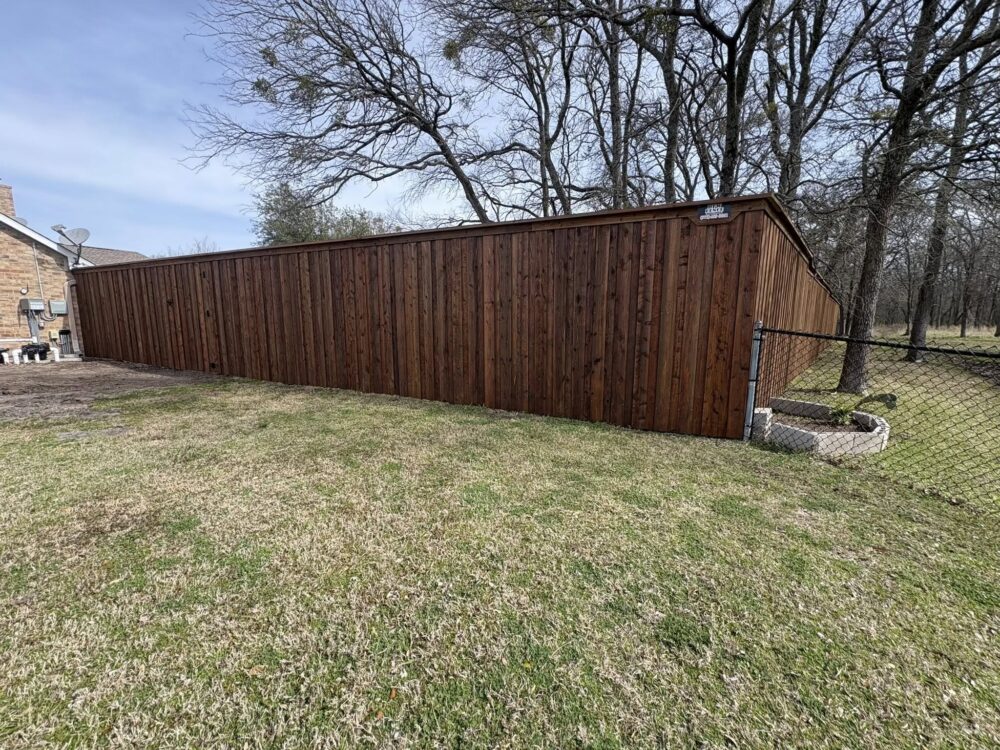
Post-storm installations are an opportunity to reconsider whether your original material was the best fit for North Texas conditions. Cedar and pressure-treated pine remain popular choices for their natural look and workability, though both require periodic sealing or staining to resist moisture in the humid summers DFW experiences. Board-on-board cedar privacy fences are particularly well-regarded because the overlapping picket design allows wind to pass through slightly, reducing the sail effect that causes so many fence failures.
Wrought iron and steel fencing offer exceptional durability and withstand wind impact better than most wood options, making them a strong choice for front yard and perimeter applications. Modern aluminum fencing provides a similar aesthetic at a lighter weight and without the rust concern. For homeowners who prioritize minimal maintenance above all else, composite or vinyl fencing with reinforced internal aluminum framing has become a reliable post-storm rebuild option, combining the clean appearance of vinyl with the structural strength that older all-vinyl products lacked.
Working With a Local DFW Contractor
After a major storm event, fencing contractors across the Metroplex get busy quickly. Permitting timelines, material availability, and crew scheduling all tighten up in the weeks following a significant weather event. Reaching out to a licensed, local contractor early, ideally within the first few days after the storm, puts you ahead of the rush and gives you more options in terms of material selection and project timing.
At DFW Fence Pro, we serve homeowners across Dallas, Fort Worth, Plano, Frisco, McKinney, Arlington, and the surrounding communities. Our team handles everything from initial damage assessment and insurance documentation support through final installation and cleanup. If your fence took a hit in the last storm, we’re ready to help you get your yard, and your peace of mind, back in order. Reach out today to get started!