
Restaurant Patio Fencing in DFW: Steel, Aluminum, or Wood?
Here’s the Short Version
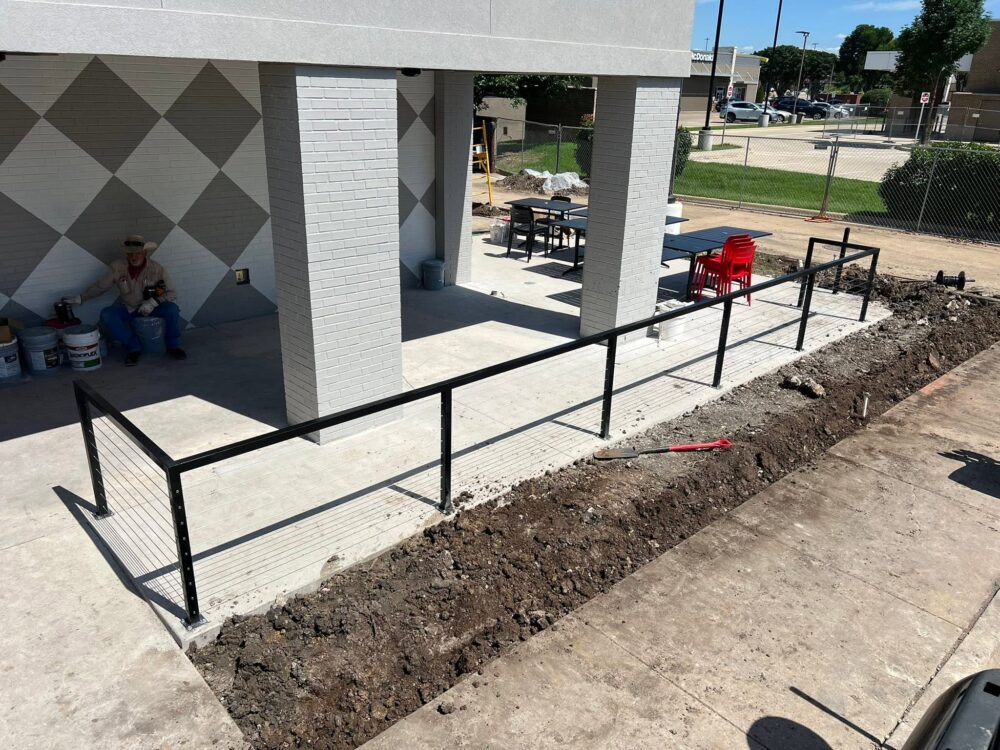
- Ornamental steel if you want the patio to look upscale and be seen from the street.
- Aluminum if you want metal fencing and never want to maintain it.
- Wood if the patio faces a parking lot, a dumpster, or a neighbor you’d rather your guests not look at.
Everything below explains why — and what each one costs you in trade.
Compare the Three at a Glance
| Ornamental Steel | Aluminum | Wood | |
|---|---|---|---|
| The look | Upscale, architectural | Clean, modern | Warm, natural |
| Privacy | None — open pickets | None — open pickets | Full privacy |
| Maintenance | Low — annual touch-up | Lowest — basically none | Highest — stain and seal |
| Strength | Strongest | Moderate | Good |
| Up-front cost | Highest | Middle | Lowest |
| Choose it when | The patio is part of your curb appeal | You never want to think about it again | You need to hide what’s next door |
Ornamental Steel and Wrought Iron
Best for: street-facing patios, upscale concepts, and any property where the fence is part of the storefront.
What It Does Well
- Strongest of the three. It handles daily abuse — chairs dragged against it, deliveries, crowds leaning on it, the occasional bumper.
- Open pickets keep sightlines clear, so a full patio advertises itself to everyone driving or walking past.
- Widest range of styles, from ornate and traditional to clean and modern, so it can be matched to almost any building.
- Gates and decorative details get built into the design instead of bolted on as an afterthought.
- Reads as permanent. It looks like an investment in the property, because it is one.
The Downside
It costs the most up front, and steel is steel — if the finish gets chipped and stays chipped, it will rust. Budget for a walk-around once a year and touch-up paint wherever the coating has been damaged.
Aluminum
Best for: modern concepts, cafés, mixed-use developments, and owners who don’t want one more thing on the maintenance list.
What It Does Well
- It will not rust. That is the whole reason to choose it, and it is a good one.
- Same open sightlines as steel — the patio still reads as open to the street.
- Comes in ornamental styles or clean contemporary lines, depending on the look you are after.
- Lightest of the three, which usually means a faster, less disruptive install.
- Upkeep is spraying it off when it gets dusty. That is the entire list.
The Downside
It is not as strong as steel. Aluminum dents where steel would not, so on a tight, high-traffic patio — chairs scraping, bus carts, cramped parking — it picks up cosmetic damage over time. Up close it also reads a little lighter and less substantial than steel.
Wood
Best for: patios that face a parking lot, a service area, a neighboring business, or a busy road.
What It Does Well
- Real privacy. It is the only one of the three that actually blocks the view.
- Screens out parking lots, dumpsters, HVAC units, and service areas so your guests are not looking at them over dinner.
- Makes an outdoor space feel enclosed and intimate instead of exposed.
- Fully customizable — height, layout, stain color, and style (side-by-side, board-on-board, or horizontal).
- Lowest material cost of the three.
- Cuts wind and some road noise, which owners tend to appreciate more than they expected to.
The Downside
It needs upkeep. Texas sun, heat, and moisture are hard on exterior lumber, so plan on re-staining or sealing every few years and replacing a board here and there.
It also works in both directions: a wood fence hides the parking lot from your guests, but it hides your busy patio from the people driving past. If that patio is a marketing asset, do not wall it off.
Still Not Sure? Pick by Situation
- Patio faces the street and you want people to see it: Steel or aluminum.
- Patio faces a parking lot, dumpster, or neighbor: Wood.
- You want the most upscale look on the property: Steel.
- You want the least maintenance, full stop: Aluminum.
- Budget is the deciding factor: Wood.
- The fence will get bumped, leaned on, and dragged against every night: Steel.
- Two of these apply to different sides of the same patio: Wood on the ugly side, metal on the street side. Nothing says the whole patio has to be one material.
Whatever You Pick, Plan the Gates First
Gates are where most patio fences go wrong, because they get decided last. Before the fence is laid out, know:
- Where guests enter — from the sidewalk, the parking lot, or both.
- Where staff run food out from the building, and whether that gate should be separate from the guest entrance.
- How wide the gates need to be for egress and accessibility. Confirm the requirements with your city before layout, not after.
- Whether the patio needs to lock after hours.
Answer those four first and the fence layout designs itself around them.
Restaurant Patio Fence FAQs
What Is the Best Fence for an Upscale Restaurant Patio?
Ornamental steel or wrought iron. It gives you a substantial, architectural look while keeping the patio open and visible from the street.
Which One Gives the Most Privacy?
Wood, by a wide margin. Board-on-board construction gives you a solid screen with no gaps to see through.
Is Aluminum a Good Choice for a Commercial Patio?
Yes, especially when low maintenance is the priority. Just be realistic about traffic — if the fence is going to take daily physical contact, steel holds up better.
How Long Does a Commercial Patio Fence Take to Install?
It depends on the size of the patio, the material, and the gate work involved. You get a schedule with your estimate so you can plan around your service hours.
Do You Handle Commercial Work Across the Whole Metroplex?
Yes. DFW Fence Pro serves commercial properties throughout Dallas-Fort Worth, from straightforward patio enclosures to large-scale commercial installations.
Get a Patio Fence Built for Your Property
A restaurant patio fence should look like it belongs with the building and hold up to a commercial pace. Steel for presence, aluminum for low maintenance, wood for privacy — the right answer depends on your patio, and it takes about five minutes on site to work out which one it is.
DFW Fence Pro handles the whole project: site assessment, material selection, custom gates, installation, and a clear scope with warranty documentation so you know exactly what you are buying.
Contact DFW Fence Pro for an estimate on your commercial patio fencing project.